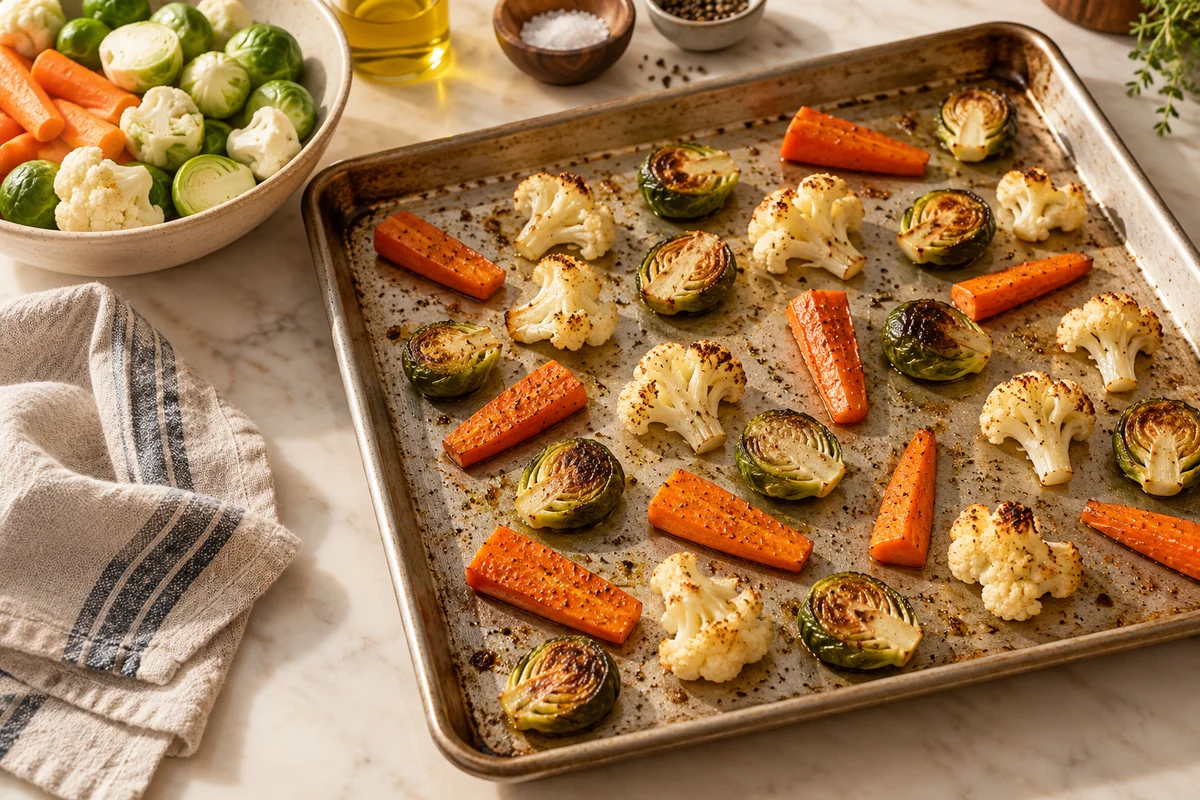
You open the oven expecting caramelized edges and find a tray of soft vegetables instead. The answer is often in the setup: wet surfaces, uneven pieces, or a tray packed too tightly. A few small changes can make roast vegetables a dish people reach for first.
Start with a dry surface
Wash your vegetables, then dry them well with a clean towel. Water clinging to cauliflower florets or Brussels sprout leaves has to evaporate before those surfaces can brown. Oil will not make that water disappear.
Frozen vegetables can still be roasted, but follow a method written for them. Thawing them and using the same setup as fresh vegetables can introduce extra moisture. Different starting conditions call for a different plan.
Cut for the vegetable, not just for a matching shape
A large carrot chunk and a thin slice of zucchini will not finish together simply because they share a tray. Dense vegetables usually benefit from smaller pieces; delicate ones may need larger pieces or a later start.
For a mixed tray, pair vegetables with similar cooking needs. Carrots and cauliflower are an easier starting point than thick potatoes and very thin asparagus. Keep a second tray ready so you can remove one vegetable when it is done.
Give each piece some breathing room
Toss the vegetables with enough oil to lightly coat their surfaces. They should look glossy, without sitting in a puddle. Arrange them in one layer with small gaps between pieces. Set flat cut sides against the metal to encourage a browned face.
If the tray looks full before you have added everything, use another tray. Crowding traps moisture around the food. A deeper casserole dish also contains steam differently from a shallow, rimmed sheet pan.
Let the tray do its work
Use the oven setting in your recipe and preheat it before the tray goes in. Leave the vegetables undisturbed long enough to develop color before turning them. Constant stirring can keep a cut surface from spending much time against the hot pan.
Check more than the clock. A piece should be tender enough for the dish you are making, with the color you want at its edges. Rotate trays if your oven browns one area faster, and check each tray separately.
Fix the most common problems
- Soft and pale: try drier vegetables, more space, or a shallower pan next time.
- Dark outside, firm inside: cut dense vegetables smaller and check your oven setting against the recipe.
- Some pieces ready, others hard: separate vegetables by cooking time, or make the cuts more consistent.
- Good texture, flat flavor: taste, then consider salt, a little lemon juice, or chopped herbs.
Finish after roasting
Add delicate herbs and fresh citrus near serving so their flavor stays bright. A spoonful of yogurt, a scattering of toasted seeds, or a little grated cheese can turn a familiar tray into something you want to make again. Start with the texture, then choose one finishing touch.
Building a holiday menu? Our Thanksgiving side-dish guide explains how a crisp vegetable dish balances richer favorites.
Make it fit your table.
When your headcount changes, bring your recipe to the calculator and review the adjusted ingredients.
Open the recipe calculator →