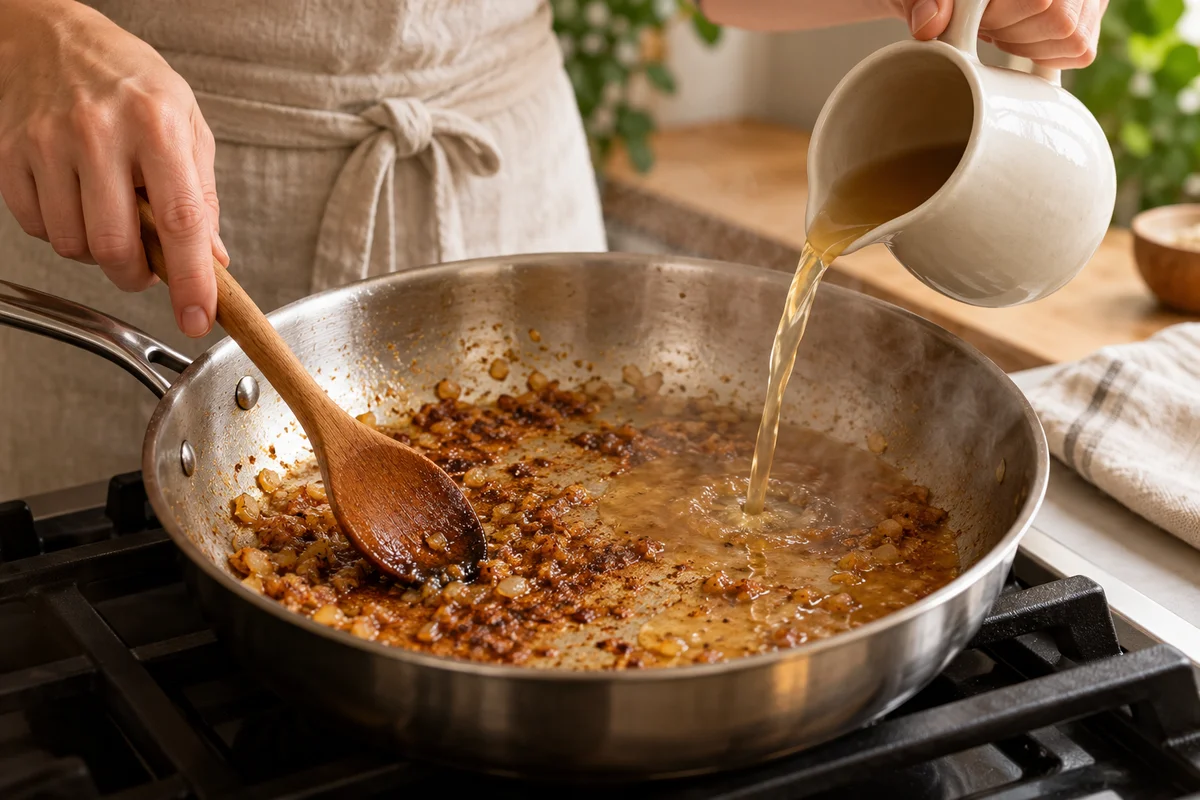
The golden layer left in a skillet after cooking onions, mushrooms, or a seared main is the beginning of a sauce. You do not need wine or a long ingredient list. You need a little liquid, a spoon, and a close look at what is in the pan.
Recognize the browned bits worth keeping
Cooks often call the browned residue on the pan fond. It forms where food has made contact with the cooking surface. A stainless steel skillet makes it especially easy to see.
Look for golden to deep brown patches with a savory smell. If the residue is blackened and smells harsh, liquid will not turn it into a good sauce. Set that pan aside to clean and make a fresh sauce in another pan.
Take the cooked food out first
Move the cooked food to a suitable plate, following the recipe’s handling and doneness instructions. Leave a light film of cooking fat in the skillet; carefully pour off excess if the pan is swimming in it.
If you want shallots or another aromatic in the sauce, soften them gently now. Watch the browned residue as you work. If it is rapidly darkening, lower the heat or briefly take the pan off the burner.
Add liquid carefully and scrape gently
Choose unsalted or lightly salted stock for a savory sauce, or use water when the pan already has plenty of flavor. Stock is an easy replacement when you do not want to cook with wine, although it will not supply wine’s acidity.
A very hot pan can spit when liquid hits it. Lower the heat and add a modest splash carefully, keeping your face and hands clear of the steam. Use a wooden spoon or a utensil suited to your pan to loosen the browned patches. Add more liquid as needed so the bottom does not dry out while you scrape.
Simmer until the sauce tastes and looks right
Once the browned bits dissolve, let the liquid simmer. Water evaporates and the flavor concentrates. Stir and watch the consistency: a light pan sauce may stay pourable, while a more reduced one will leave a thin coating on a spoon.
Do not reduce a salty stock aggressively and expect to fix it with seasoning later. Taste as you go. If the sauce becomes too strong or too thick, add a little water and stir before deciding whether it needs anything else.
Finish with balance
Take the pan off the heat before stirring in a small piece of cold butter for a glossy finish. Alternatively, keep the sauce simple and finish with chopped herbs. A little lemon juice or mild vinegar can brighten a rich sauce; add a small amount, taste, and stop when the flavor feels balanced.
Return any suitable resting juices to the sauce as your recipe directs. Spoon the sauce over the food just before serving instead of drowning a crisp crust in it.
Three mistakes to avoid
- Scraping burnt residue into a sauce because it looks like fond.
- Adding lots of salt before the liquid has reduced.
- Letting the skillet boil dry while you fetch the next ingredient.
Try the technique after cooking mushrooms or onions first. It gives you a clear view of the browned layer and a straightforward way to learn how the sauce changes as it simmers.
Make it fit your table.
When your headcount changes, bring your recipe to the calculator and review the adjusted ingredients.
Open the recipe calculator →