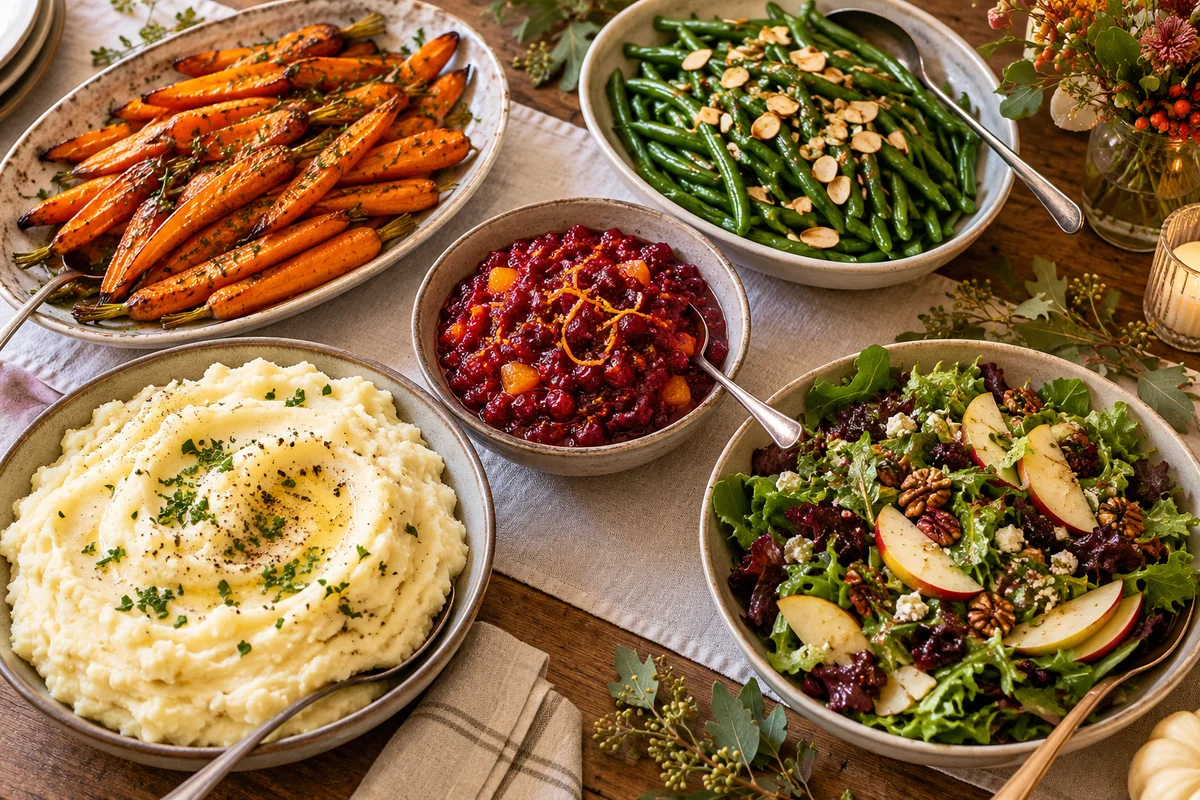
The best Thanksgiving side-dish menu does not need to be the longest one. It needs a few dishes people love, enough contrast to keep each plate interesting, and a cooking plan that leaves you time to enjoy dinner.
Give every side a job
Start with your family’s nonnegotiable favorite, whether that is stuffing, mashed potatoes, or a particular casserole. Then look at what the plate still needs. Is everything creamy? Everything sweet? Everything waiting for the same oven rack?
Build around flavor and texture rather than adding another dish because it sounds festive. A familiar casserole often shines more beside a crisp salad than beside two more casseroles.
Choose one comforting anchor
Mashed potatoes, stuffing, or a favorite baked pasta can be the comforting center of your side-dish menu. You can serve more than one when tradition calls for it, but recognize that they play a similar hearty role.
If you love both stuffing and potatoes, keep them and simplify elsewhere. The point is to make deliberate choices, not to impose a rule on a holiday meal.
Add something green with a little bite
Green beans, Brussels sprouts, broccoli, or a leafy salad bring contrast to soft, rich dishes. Choose one and give it attention. Beans can be cooked on the stovetop while a salad needs no oven space at all.
Keep the finish simple: citrus zest, herbs, or an appropriate crunchy topping. Check guests’ dietary needs before using nuts, cheese, or a dressing with less obvious ingredients.
Use tartness to brighten a rich plate
Cranberry sauce or relish gives a different flavor from butter, gravy, and roasted vegetables. A sharp dressing, lemony greens, or a small serving of pickled vegetables can offer a similar kind of contrast.
You do not need every dish to be strongly acidic. One bright element lets diners change the balance of a forkful. Taste your chosen dish on its own and alongside a bite of something rich before deciding it needs more sweetness.
Make room for roasted flavor
Carrots, squash, cauliflower, and other vegetables can bring color and browned edges to the table. Give them enough space on the tray and finish them close enough to serving that the texture is still appealing.
If your oven is already committed to another dish, choose a stovetop alternative instead of forcing in one more tray. Our roasted-vegetable guide explains why tray space matters.
A simple menu to adapt
- Comfort: mashed potatoes or your favorite stuffing.
- Green: green beans with herbs, or a crisp leafy salad.
- Color and browning: roasted carrots or squash.
- Brightness: cranberry sauce or relish.
This is a planning example, not a requirement or a fixed recipe. Swap freely for the dishes that belong at your table. If the meal already includes a rich main, you may prefer a lighter selection of sides; a vegetable-focused main may call for more substantial accompaniments.
Check the final menu against the kitchen
Mark which dishes are made ahead, which need reheating, and which finish at the last moment. Use each recipe’s storage and food-safety instructions. Try to avoid having every side demand active attention at once.
Once the menu feels right, use our Thanksgiving prep plan to organize the work. Let the meal reflect your family’s tastes, including the one dish someone would miss if it were not there.
Make it fit your table.
When your headcount changes, bring your recipe to the calculator and review the adjusted ingredients.
Open the recipe calculator →