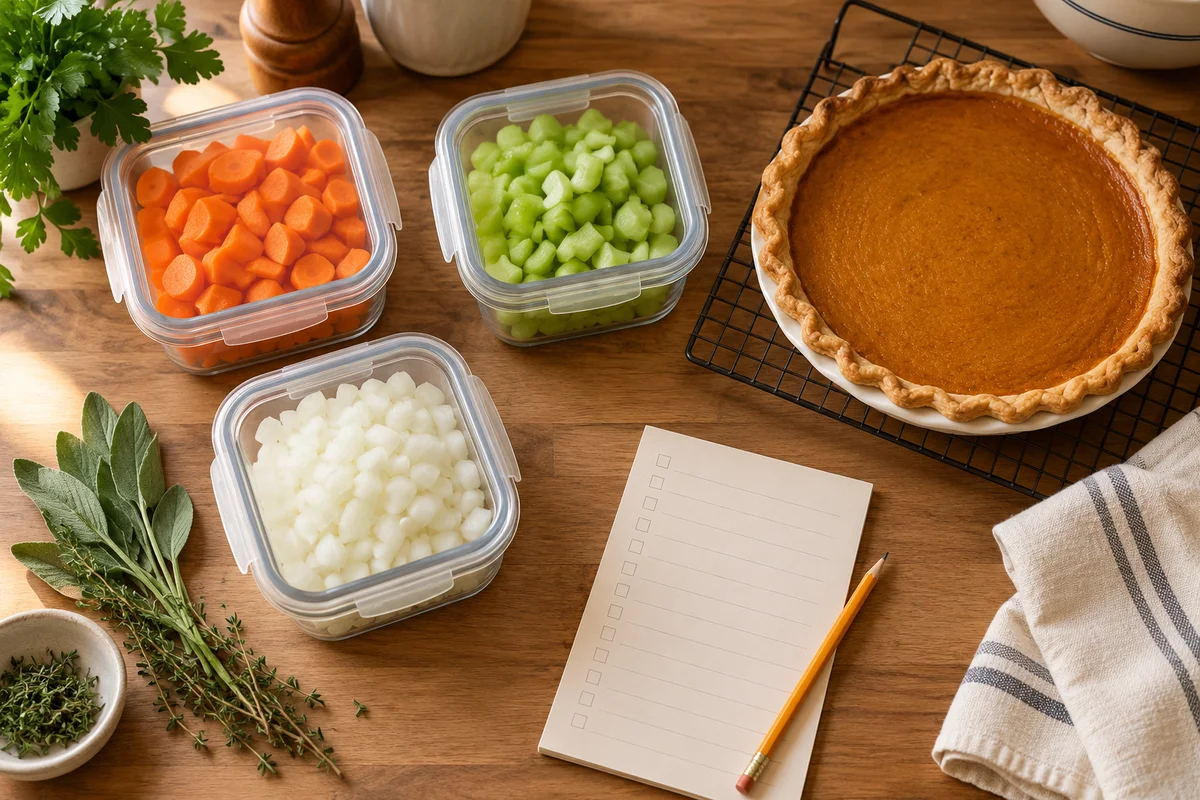
A calmer Thanksgiving starts with fewer decisions on the day, not with a perfect minute-by-minute schedule. Decide what matters most, give each dish a place in the kitchen, and leave yourself a little room for a late guest or a slow oven.
Start with the meal people actually want
Ask everyone for the dish they look forward to most. You may discover that the family wants a familiar stuffing and cranberry sauce more than three additional sides. Build the menu around those favorites, then choose a few dishes that bring freshness and contrast.
Check dietary needs directly with guests. Keep ingredient labels and know which utensils belong to dishes that need to stay separate. A quick conversation before shopping is easier than trying to redesign dinner while the oven is full.
Make an equipment map
Write down each dish, the pan it uses, whether it needs the oven or a burner, and what must happen just before serving. A menu can fit the table and still fail to fit the oven.
Look for collisions. If the main dish and two sides all require different oven settings at the same time, change the plan now. Choose a stovetop vegetable, a salad dressed at the end, or a dish specifically designed to be made ahead and reheated.
A few days before: clear the path
Shop from the whole menu so shared ingredients appear together on your list. Check your pantry before buying duplicates. Clear refrigerator space and find the serving bowls, trivets, spoons, and storage containers you will need.
Choose reliable recipes for the important dishes. Save a complicated first attempt for a quieter dinner. Read every make-ahead, storage, and reheating note before deciding that a dish can be finished early.
The day before: do the jobs that genuinely help
Set the table, assign serving dishes, and prepare appropriate ingredients according to their recipes. Some vegetables can be washed and cut ahead; others are better prepared closer to cooking. Keep prepared ingredients covered and refrigerated when needed.
A pie or sauce may be a good make-ahead candidate when its specific recipe provides suitable storage instructions. “Made ahead” does not mean “left on the counter.” For storage, cooling, and reheating guidance, consult the USDA’s leftovers and food-safety guidance.
On the day: work backward from serving
Pick a realistic serving window rather than promising dinner to the exact minute. Put your main dish’s cooking and resting needs on the plan first, following its recipe and food-specific safety guidance. Fit the sides around the equipment that is actually available.
Keep one short list of finishing jobs: dress the salad, warm the serving dish, add herbs, bring the sauce to the table. Delegate a complete task—“finish and serve the salad”—instead of asking someone to help without giving them a clear role.
Plan the end of dinner, too
Have containers ready so leftovers can be handled promptly using the appropriate food-safety guidance. Decide who will help clear, and label food before sending it home. A little organization after the meal makes the next day more pleasant.
Most of all, make space in the plan to sit down. Your guests came for the people around the table as much as the food on it. For a menu that needs less last-minute juggling, explore our guide to balancing Thanksgiving side dishes.
Make it fit your table.
When your headcount changes, bring your recipe to the calculator and review the adjusted ingredients.
Open the recipe calculator →