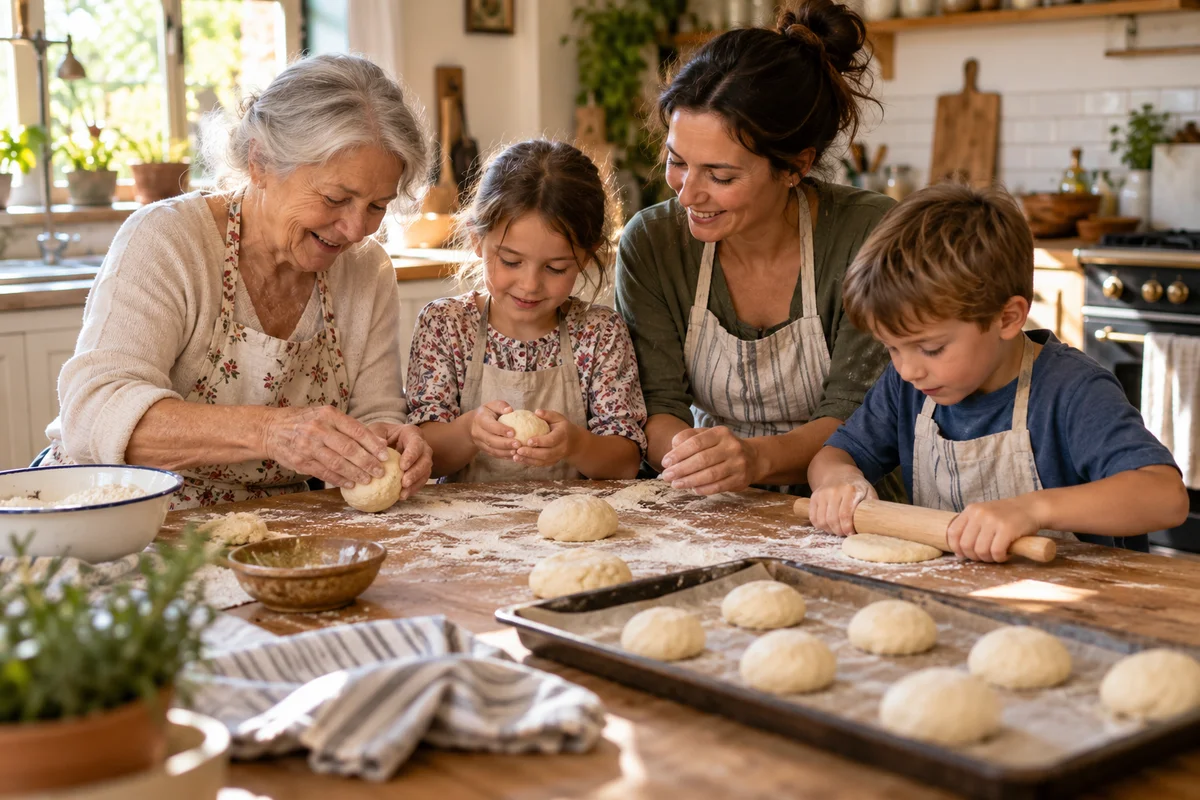
Sometimes the memory is not the finished cake. It is the flour on someone’s sleeve, the way Grandma presses the dough, or the story that starts when an old mixing bowl comes out of the cupboard. Cooking with family makes room for those moments in an ordinary day.
Choose something with room for company
A shared kitchen does not have to mean a big holiday project. Tearing lettuce, shaping bread rolls, assembling a salad, or arranging a fruit plate can give several people a place to begin. Choose a familiar recipe so you are not trying to learn a difficult technique while teaching it.
Think about the space as well as the dish. Clear a section of table, set out the tools, and decide who will handle heat and sharp equipment. A comfortable place to stand or sit makes participation easier for children and older relatives alike.
Give each person a real part
“Help me cook” is a broad invitation. “Would you tear these herbs into the bowl?” is a task someone can understand and finish. Choose jobs to match the person’s abilities and comfort, with adult supervision where needed.
- Young helpers can wash suitable produce, tear leaves, or set out napkins.
- More confident helpers can shape dough, stir a cool mixture, or assemble dishes.
- An experienced cook can demonstrate a technique and tell the story behind it.
- Someone who would rather stay away from food prep can choose the music, write place cards, or set the table.
No one needs to earn a place in the kitchen by being fast. A useful role and a patient invitation are enough.
Show once, then let them try
Explain what you are doing as you do it: how the dough should feel, why you steady the bowl, or what tells you the herbs are ready. Then make space for the other person to practice.
It can be tempting to take over when a roll looks uneven or a salad leaf is larger than you would choose. If the task is safe and the food will work, let the variation belong to its maker. The lesson is more memorable when someone gets to complete it.
Ask about the food’s story
Who taught you to make this? Was it always cooked in that pot? What did you eat it with when you were little? Questions like these can turn a familiar dish into a piece of family history.
Write down the details with permission, especially the cues that never made it into a recipe card. “Until it looks right” becomes more helpful when the cook explains the color, smell, or texture they mean. A quick note can preserve a technique as well as an ingredient list.
Make the cleanup part of the togetherness
Set out a bowl for scraps, wipe spills as you go, and give everyone a manageable closing job. Shared cooking feels less welcoming if one person is left with all the dishes afterward.
Keep food-handling basics part of the routine: clean hands and work surfaces, separate appropriate prep tasks, and adult control of hot equipment. Save tasting for ingredients and food that are ready to eat; raw flour mixtures and raw dough are not tasting snacks.
Let a small ritual become a tradition
Maybe it is Sunday rolls, a birthday breakfast, or the salad someone always makes when they visit. A tradition does not need a formal beginning. It grows when people enjoy doing something together and want to return to it.
The meal may be simple and the counter may be messy. What matters is that there was a place for everyone who wanted to join in—and enough patience for the food and the memories to take shape.
Make it fit your table.
When your headcount changes, bring your recipe to the calculator and review the adjusted ingredients.
Open the recipe calculator →