Halving a recipe is straightforward until the ingredient list says “one egg.” The arithmetic still works. Measuring the result takes one extra step.
Halve the quantity, not the ingredient list
For a recipe that serves four, a target of two gives a multiplier of 0.5. Every specified quantity is multiplied by one-half. One cup becomes half a cup. One and a half cups become three-quarters of a cup. One egg becomes half an egg.
Do not silently round half an egg up to a whole egg and assume the proportions stayed the same. That is a recipe change. It may be a choice you make, but it is different from halving the original ingredients.
A practical way to measure a fraction of an egg
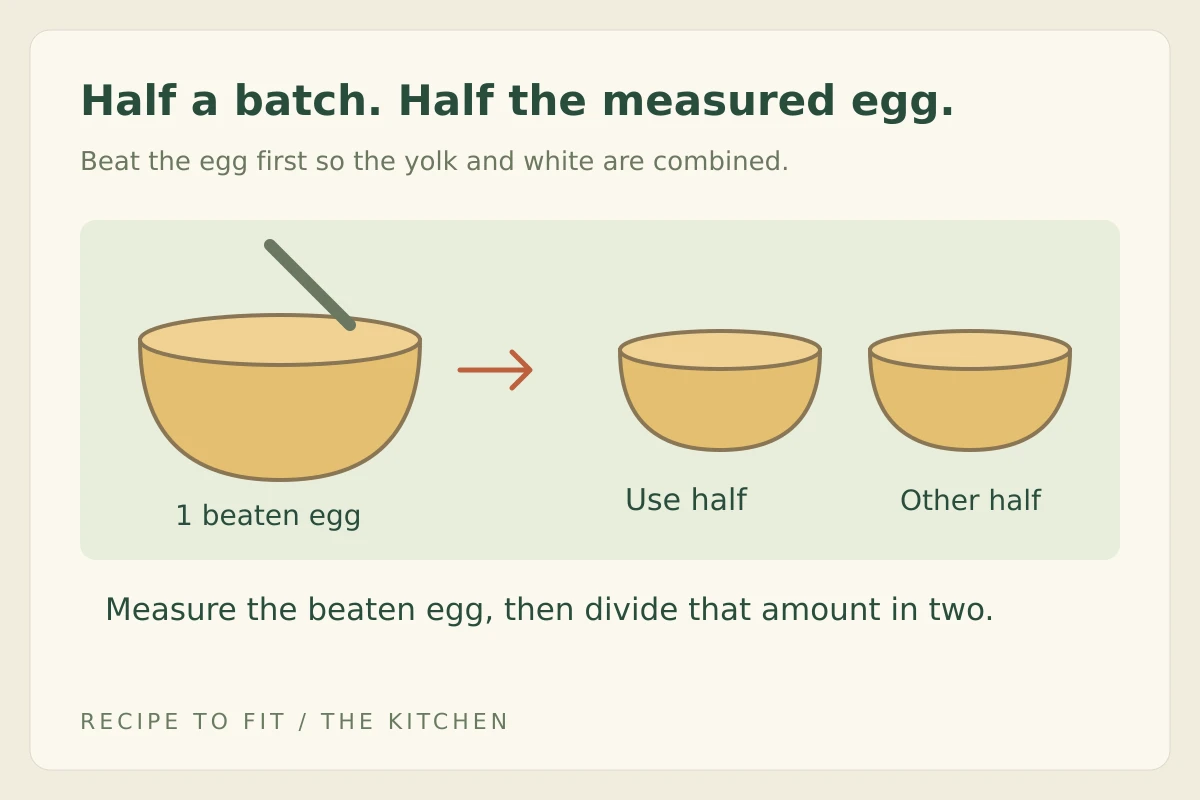
Crack the egg into a small bowl and beat it until the white and yolk are combined. Measure the beaten egg, then use half of that measured amount. A kitchen scale makes it possible to work from the egg you actually have rather than assuming every egg weighs the same.
This approach also gives you a way to measure other fractions, such as three-quarters of a beaten egg. It does not solve recipes that use a whole egg structurally or require the yolk and white to be handled separately. Read the method before deciding whether the smaller batch is practical.
Keep small amounts visible
Small-batch cooking can create quantities that do not match the markings on your measuring tools. Keep the exact fraction visible when possible. If a display value is rounded, notice that it is approximate rather than treating it as a new exact measurement.
For very small quantities, the limiting factor may be your equipment. A spoon labeled with the fraction you need or a suitable scale can be more useful than a decimal you cannot measure reliably. Avoid guessing that a pinch equals a particular scaled amount.
Choose the pan for the smaller batch
A half batch spread across the original large pan can have a different depth. A smaller pan may produce a closer setup, while some recipes are easier to divide into individual portions. The calculator does not choose the pan or halve the cooking time for you.
When a different batch size is easier
If measuring the fractional egg or tiny ingredients makes the recipe awkward, choose a serving target that fits the ingredients you can measure. A half batch is an option, not a requirement. You can compare a few targets in the calculator before deciding what to cook.
The goal is a smaller amount of food with clear proportions. Keep the fractions honest, check the method, and choose a batch you can actually measure.
Make it fit your table.
When your headcount changes, bring your recipe to the calculator and review the adjusted ingredients.
Open the recipe calculator →